Haltwhistle sits in the South Tyne Valley roughly in the geographical centre of Britain — a fact the town wears with quiet confidence. More importantly for buyers, it sits on the Tyne Valley railway line with direct services to Newcastle, within walking distance of some of the best-preserved sections of Hadrian’s Wall, and on the edge of the North Pennines Area of Outstanding Natural Beauty. For buyers willing to look slightly beyond the county’s well-known commuter villages, Haltwhistle offers something increasingly rare: genuine countryside life with genuine connectivity, and property that still makes financial sense.
The centre of Britain — and a lot more besides
Haltwhistle’s claim to be the geographical centre of Britain is tested regularly by rival claimants, but the local feeling of being at the heart of something real is harder to dispute. The town functions as a genuine local hub for the upper South Tyne Valley — a high street with independent businesses, a library, a leisure centre with a swimming pool (a genuine rarity in rural Northumberland), and a community that has shaped itself around living here rather than commuting through.
The town centre has a character formed by its stone buildings and its history: from the medieval fortified tower at St Cuthbert’s Church to the railway station that has been running services since the Victorian era. Haltwhistle is not a heritage village frozen in time; it is a working market town that happens to have one of England’s great Roman frontiers on its doorstep.
“Haltwhistle offers something increasingly rare in Northumberland: a direct train to Newcastle, countryside that begins at the end of the street, and property that still offers genuine value for buyers who have done their homework.”
Connectivity — the commuter case
The Tyne Valley line runs from Carlisle east through Haltwhistle to Newcastle, with a journey time to Newcastle Central of around one hour. The A69 dual carriageway runs parallel and is close enough to make car commuting to the city realistic at around the same time. That combination — rail and road into a major city, both usable — is genuinely valuable and is rarer in rural Northumberland than buyers sometimes expect.
For hybrid workers who need an office two or three days a week, Haltwhistle works very well. For buyers who have stepped back from daily commuting entirely, it works even better. The town is connected enough to feel part of the wider world without being suburban.
The property market in Haltwhistle
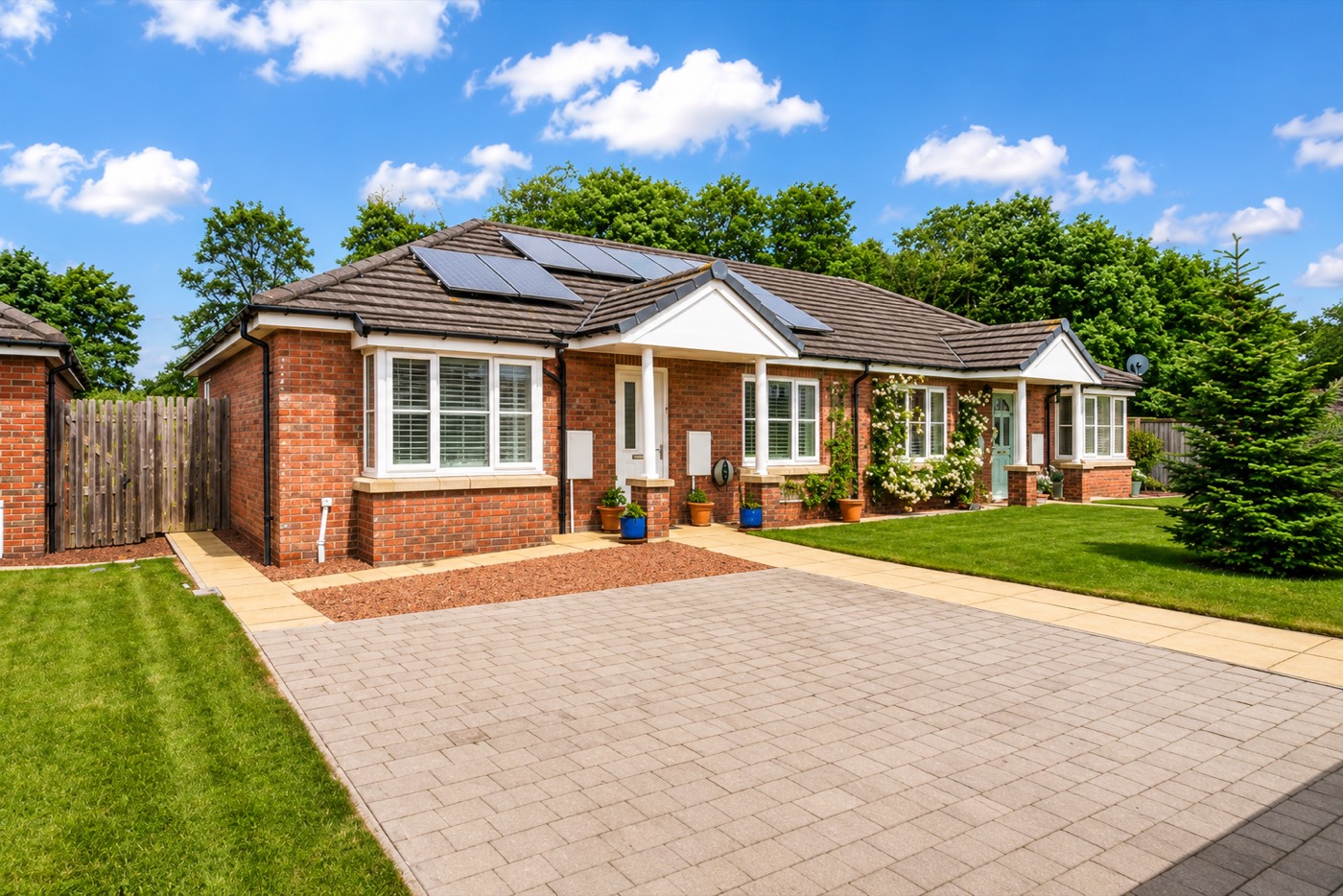
The housing stock reflects the town’s history: stone-built terraces and traditional cottages on the older streets, a mix of semi-detached and detached stone houses on the residential streets, and some more recent estate properties on the town edges. Values here sit noticeably below the more prominent Tyne Valley villages of Corbridge, Stocksfield or Hexham. The trade-off buyers make is straightforward: less proximity to the commuter-belt postcode, more space, a bigger garden, and often significantly more character per pound spent.
Demand comes from a distinctive mix of buyers. Local movers account for a healthy proportion. People relocating from Tyneside and beyond in search of space and a lower cost of living form a growing second group. And increasingly, remote workers — particularly those in tech, professional services and the public sector — are identifying that Haltwhistle’s fibre broadband coverage and rail link make it a genuine alternative to the more expensive Tyne Valley commuter villages. Second-home and holiday-let purchases are far less common here than on the coast, which keeps the market grounded and makes competition for permanent family homes more predictable.
Schools and everyday life
Queen Elizabeth High School serves Haltwhistle and a wide rural catchment and has a reputation for strong pastoral care alongside its academic results. Primary provision in the town is well-regarded. Practical day-to-day infrastructure is solid by rural standards: a GP surgery, pharmacy, supermarket, independent shops and a leisure centre with a swimming pool all within the town. For larger retail, Hexham — around 20 miles east — covers most needs, with Newcastle a viable day trip rather than a regular necessity.
Hadrian’s Wall and the North Pennines
The outdoor appeal here is exceptional. Hadrian’s Wall — a UNESCO World Heritage Site — runs immediately north of the town, with some of its most dramatic sections accessible on foot from Haltwhistle: the Cawfields crags, Vindolanda Roman fort and museum, and the sweeping ridge walk between Steel Rigg and Housesteads. To the south, the North Pennines AONB opens out into the Allen valleys, with Allendale and the wild moorland beyond reaching towards the Pennine watershed.
For a buyer whose priorities include walking, cycling, wild swimming or simply opening the back door to genuine open country, Haltwhistle delivers that in a way that very few towns anywhere in the North of England can match.
Is Haltwhistle the right move for you?
Haltwhistle works well for buyers who are honest with themselves about what they want from a move. If the answer is a genuine market town with rail connectivity, open countryside, Roman history and property that makes financial sense — it delivers all of that without asking you to compromise on the others. If the answer is walking distance to Hexham’s independent shops, a more established commuter-belt address or the social scene of a larger town, there are Northumberland market towns that suit that profile more closely.
The buyers who move to Haltwhistle and stay are almost universally the ones who came for the right reasons. Understanding what you actually want before you start viewing can save considerable time and the quiet disappointment of buying a beautiful house in the wrong context.