Why families look beyond Morpeth town
Morpeth is one of Northumberland's most desirable market towns — and buyer demand reflects that. For families who want the schools and rail links that Morpeth offers, but with more outdoor space, a quieter road and a real sense of community, the villages within five miles of town deserve a serious look.
This is not about settling for less. In many cases the villages around Morpeth offer more: larger gardens, more character in the buildings, lower density, and a genuinely slower pace of life while the town is still a short drive away.
The villages around Morpeth are where families come when they want Northumberland life properly — not just a postcode.
Mitford — the closest and most picturesque
Just two miles west of Morpeth town centre, Mitford is the kind of village that stops people in their tracks. A castle ruin above the River Wansbeck, stone cottages, a medieval church and almost no through traffic. It is small, which means property rarely comes to market — and when it does, it goes quickly.
For families, the appeal is the combination of genuine rural character with town-level convenience. Morpeth's amenities, supermarkets and station are less than ten minutes by car. The village school catchment means secondary-age children typically travel into Morpeth itself.
Stannington — the commuter-friendly choice
South of Morpeth on the A1 corridor, Stannington sits in a strong position for families who commute into Newcastle or Tyneside. The village has a real community feel, a historic church and some quietly impressive family homes set back from the main routes through the area.
Demand from buyers relocating from Newcastle and the wider North East is consistent here. Families who want a genuine countryside address but cannot afford to sacrifice the commute often land on Stannington as the answer.
Longhorsley — north of town, proper village life
Drive north from Morpeth on the A697 and Longhorsley is the first real village you encounter. It has a pub, a village hall, a strong agricultural community and access to open countryside that feels properly remote — despite being only five or six miles from the town centre.
Property here tends to be detached and substantial. The village attracts buyers who want space — both inside and out — and who value the agricultural character of the surrounding landscape. For families with dogs, horses, or a need for outbuildings and land, Longhorsley regularly appears on shortlists.
Whalton — understated, much sought-after
Whalton is one of those Northumberland villages that does not shout about itself. A cluster of handsome stone buildings around a traditional village green, Whalton has been a Conservation Area for decades and the built environment reflects that — carefully maintained, with almost no modern intrusions.
It is roughly nine miles southwest of Morpeth, which makes it a slightly longer drive to town and to the station. For families who are prepared to accept a longer school run in exchange for outstanding rural surroundings and a genuinely characterful home, Whalton is worth knowing about. Properties here rarely sit on the market for long.
Hebron — quiet, community-minded, close to town
Hebron sits just east of the A1, close enough to Morpeth to feel like an extension of the town while retaining a distinct village identity. It is a modest village — no pub, no shop — but the community is active and the location is hard to fault for families who need regular access to Morpeth or the A1 arterial route north and south.
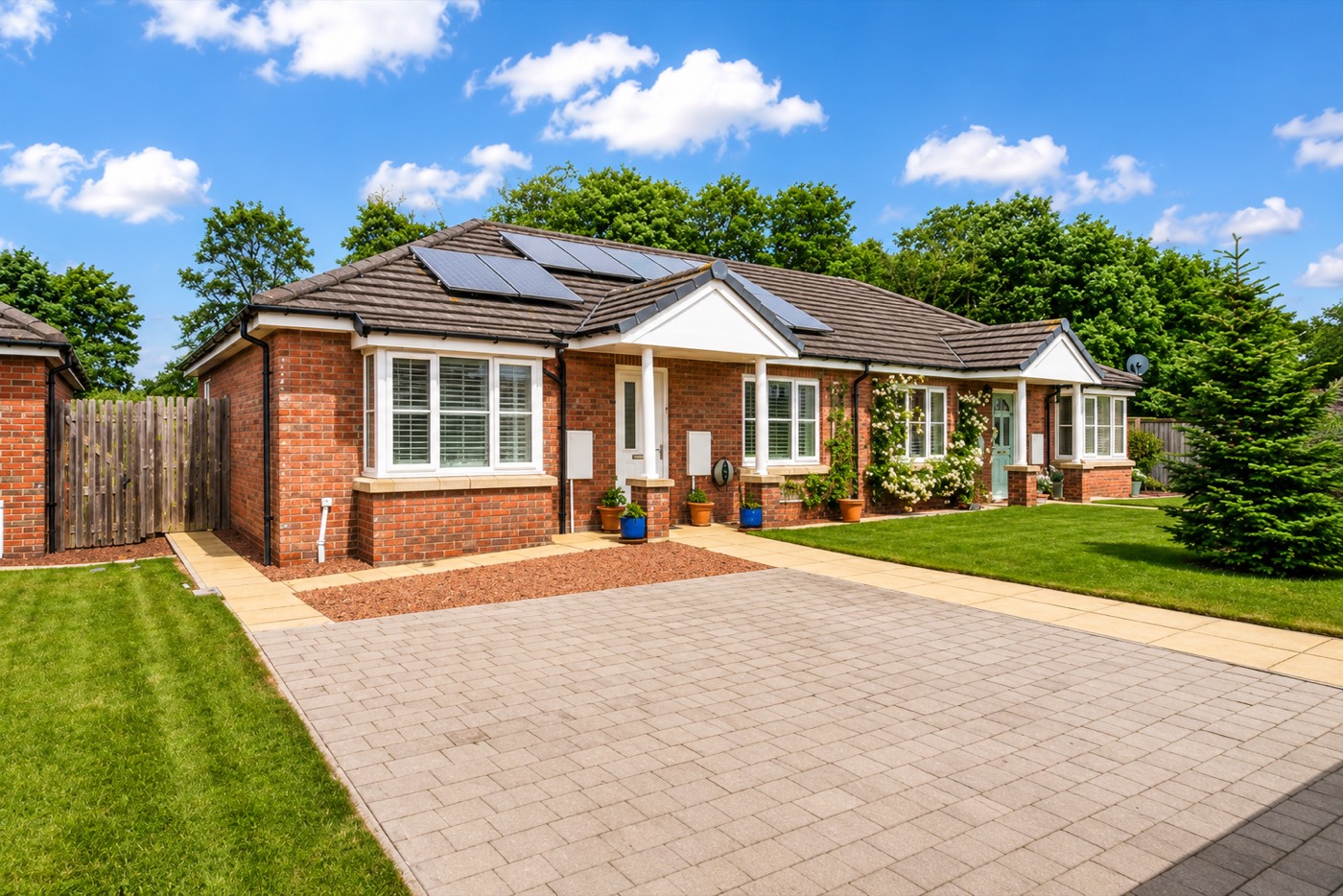
The property mix leans towards family-sized semis and bungalows alongside a small number of more individual homes. It is consistently underestimated by buyers who focus on more prominent villages first.
What to think about: schools, transport and the commute
The practical questions for families buying in the Morpeth villages are consistent:
- Secondary schooling: King Edward VI Academy in Morpeth takes students from across a wide catchment, but check admissions each year — the rules can change. First and middle schools vary by village, so always confirm directly with Northumberland County Council before committing to a purchase.
- The commute: Morpeth station has direct East Coast Main Line services to Newcastle in around 15–20 minutes. Village buyers who commute typically combine a short drive to Morpeth with the train — a manageable arrangement for most professional households.
- The car dependency: Village life in Northumberland means being comfortable in a car. There is no escaping it. Buses exist but are infrequent. If a household has only one driver or is planning to reduce car use significantly, a village purchase around Morpeth warrants careful thought.
The property market: what demand looks like
The villages around Morpeth have seen consistent interest from buyers over recent years. Demand is driven by three groups in particular: families relocating from Tyneside and the wider North East seeking more space; remote and hybrid workers who no longer need to commute daily; and people at or approaching retirement who want Northumberland life with town facilities nearby.
Supply in the villages is structurally limited. The Conservation Area status of several of the most desirable settlements constrains new development, which means when a good family home appears, competition is genuine. Offers over asking price are not unusual for the right property in the right village.
Qualitatively, the villages carry a premium over comparable square footage in Morpeth town — buyers pay for the setting, the character and the sense of space. But they also tend to hold value well as a result.
Our view
The villages near Morpeth represent some of the most rewarding family property in the county — but they require patience. Stock is limited, the best homes go quickly and the buying process demands proper preparation. If you are currently living in one of these villages and considering whether now is the right time to sell, we would be glad to give you an honest picture of what demand looks like right now.