Rothbury: a market town on the edge of everything
Rothbury sits in the Coquet Valley, roughly ten miles from Morpeth along the A697, and it manages something genuinely difficult to pull off: a proper market town feel — independent shops, traditional pubs and a working community — set against the open moorland of the Northumberland National Park. If you have ever driven through on a clear morning and thought I could live here, you are far from alone.
The town has held a market charter since medieval times and that character has never quite left it. The wide main street, the stone-built terraces rising up the valley sides, the River Coquet threading through the lower town — all of it gives Rothbury a sense of permanence that draws a particular kind of buyer: people making a deliberate choice about how they want to live, not just where.
Rothbury rewards people who want to be outdoors every day, rooted in a genuine community, and still connected enough to Morpeth or Newcastle to live a normal life.
Who moves to Rothbury — and why demand has broadened
The buyer profile in Rothbury has shifted in recent years. Where once it drew predominantly retirees and second-home buyers, the town now attracts a meaningful number of remote and hybrid workers who have recognised that fast broadband and a good road south are all they need. Families are drawn by Rothbury CE First School, the relative safety of small-town living and the quality of outdoor life on offer — the Simonside Hills, Cragside National Trust estate and miles of Coquet Valley walking start practically at the front door.
That mix of buyers — settled retirees, young families and working-age incomers — gives Rothbury a more balanced demographic than many comparable Northumberland villages. The result is a town that genuinely functions: a chemist, a post office, a butcher, cafes, pubs, a GP surgery and a packed community calendar. Most day-to-day errands can be handled without leaving town.
Commuting is realistic rather than effortless. Morpeth is around 25 minutes by car, and from there the A1 and the East Coast Main Line open up Newcastle and the wider north-east. Rothbury is not a commuter suburb — it is a place people choose with intention, and the travel is planned around that. Buyers who come here tend to know that going in, and they would not swap it.
For buyers searching specifically in Rothbury, it is worth extending your search to nearby villages including Thropton, Hepple and the roads towards Elsdon — all of which sit within easy reach of the town and offer even more space or a more rural position for those who want it.
Property in Rothbury: what to expect when you buy or sell
Rothbury's property mix is quintessential Northumberland: stone-built cottages and terraced houses in the town itself, with detached homes and former farmsteads on the roads out. Character is in plentiful supply. Original features — stone fireplaces, flagged floors, deep window sills, exposed timber — appear regularly, particularly in the older stock closer to the town centre.
Supply is structurally limited. Rothbury sits within and adjacent to the Northumberland National Park, which constrains new development. Large estates are not appearing here, and that is unlikely to change. When quality homes do come to market, they tend to attract buyers who have been watching for some time — often from outside the immediate area, sometimes from outside the county entirely.
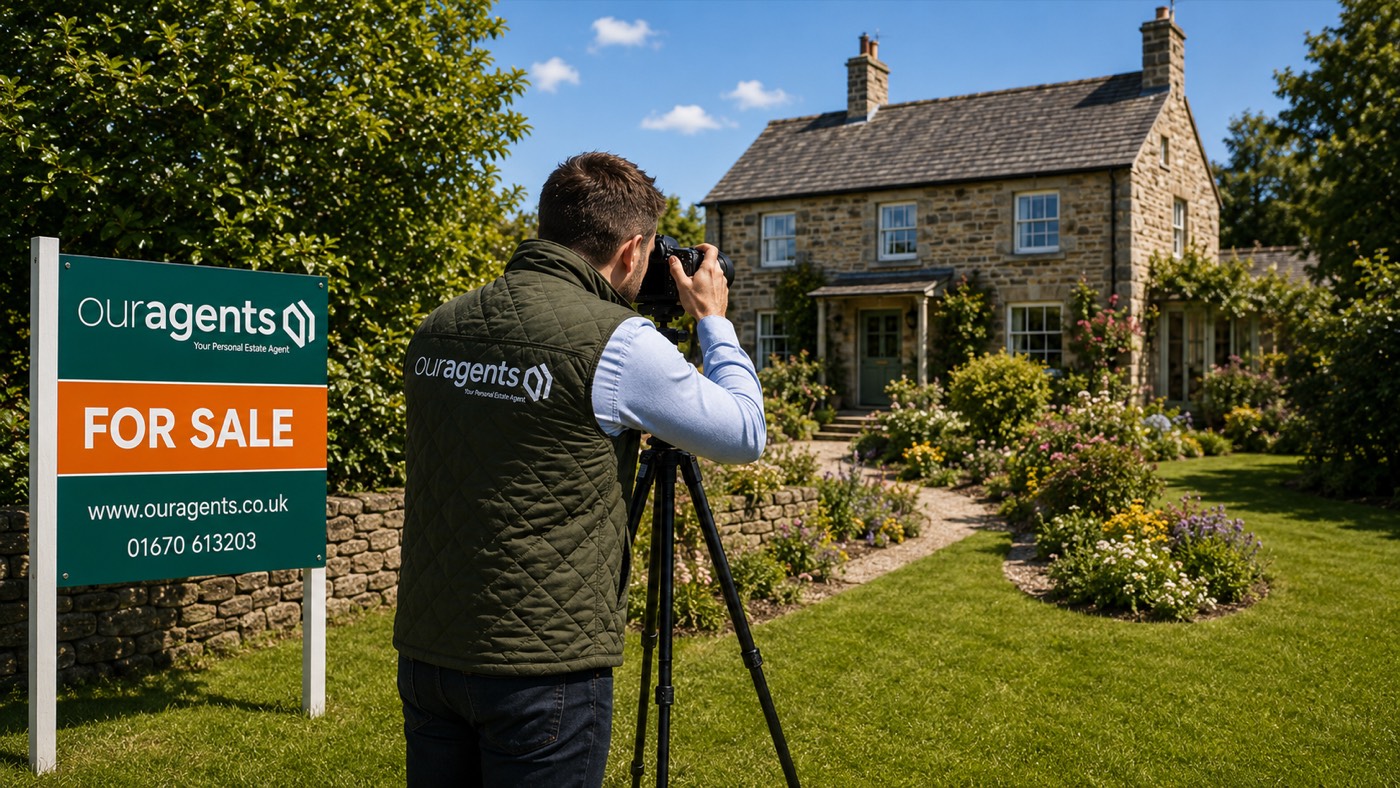
For sellers, that constrained supply is genuinely advantageous — but the marketing has to match the quality of the home and its setting. Character properties in Rothbury respond particularly well to professional photography that captures both the interior and the wider landscape, a considered narrative about the lifestyle on offer, and structured viewings that allow buyers travelling from a distance to make a confident decision rather than returning for a second or third visit.
A managed open house — where pre-registered buyers view the property on the same day under transparent conditions — works especially well in markets like Rothbury, where serious buyers often travel and want to commit quickly. Properties handled this way tend to generate stronger competition at the point of offer, which matters in a market where pricing evidence can be thin on the ground.