Why Corbridge keeps drawing buyers back
Corbridge, Northumberland — the name alone carries a certain weight. It is a place that buyers mention with something close to reverence: a stone market village in the Tyne Valley with Roman roots, an independent high street, a railway station and a school with a strong reputation. For professionals within commuting distance of Newcastle, it has become one of the most consistently enquired-about addresses in our whole coverage area.
And yet it rarely feels busy. That is the particular trick Corbridge pulls off: demand is high, stock is limited and the setting is genuinely beautiful — and still, on a Tuesday morning, the main street moves at the pace of a village rather than a commuter town. That balance, once experienced, is very hard to leave behind.
The setting: Roman heritage, river walks and a valley that earns its reputation
Corbridge sits on the south bank of the River Tyne, around four miles east of Hexham and fifteen miles west of Newcastle. The village grew from a Roman settlement — Corstopitum — and Corbridge Roman Town, managed by English Heritage, sits just outside the village. Hadrian's Wall runs a few miles to the north. History is not a backdrop here; it is woven into the fabric of the place.
The River Tyne forms the northern boundary of the village, with walks along the bank connecting Corbridge to the wider Tyne Valley landscape. To the south, rolling farmland opens up toward the North Pennines. The combination of a working, thriving village and a genuinely outstanding natural setting makes Corbridge unusual even by Northumberland standards.
A Roman fort at the edge of the village, a cobbled market square in the centre, direct trains to Newcastle from the station at the bottom of the hill. Corbridge is, in the best possible way, completely itself.
Who is moving to Corbridge?
The buyer profile in Corbridge skews toward professionals and families. The railway connection to Newcastle — roughly 30 minutes — makes it a genuinely viable base for those working in the city two or three days a week. The shift toward hybrid working has expanded that buyer pool considerably: people who once ruled out a village with limited public transport now find that a train to Newcastle for team days works perfectly well alongside a home office for the rest of the week.
Families come for the schools and the outdoor life. Retirees arrive from Newcastle, Yorkshire and further south, drawn by the quality of life and the relative value compared with equivalent villages in the Cotswolds or the South Downs. Second-home buyers have also been active in Corbridge, though the most motivated purchasers right now are families making a permanent move.
Competition for the best properties is real. Corbridge is not a place where you browse leisurely — if something comes to market and it ticks the right boxes, the window to act is short.
The property mix in Corbridge
The housing stock is anchored by the village's Georgian and Victorian character. Stone-built terraced houses and detached period homes dominate the core, alongside a number of handsome farmhouses and cottages within easy reach of the village centre. Condition and specification vary — which means there is still genuine opportunity for buyers prepared to update — but the best-presented homes attract strong interest quickly.
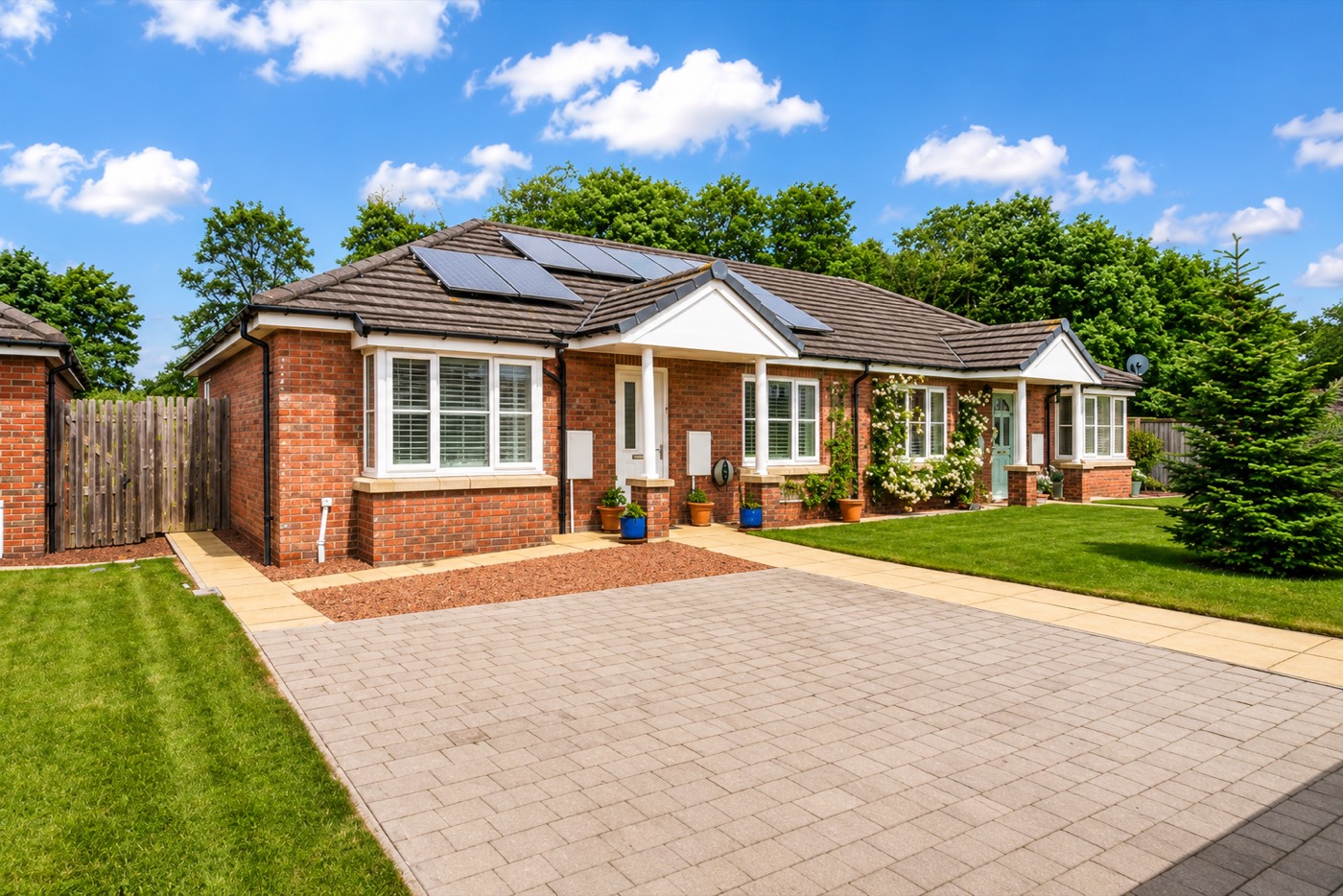
There are more modern developments on the fringes, though in Corbridge the character stock tends to be what buyers are really looking for. Outlying hamlets and rural properties feed into the broader market; buyers who miss out on the village itself sometimes find excellent alternatives within five minutes of the high street.
Supply is consistently tighter than demand. Homeowners in Corbridge tend to stay, which means turnover is low relative to the level of interest from potential buyers. Registering your search early — and being financially prepared to move when something appears — is not just good advice here, it is effectively essential.
Schools and family life in Corbridge
Corbridge Church of England First School is the starting point for most families, and it has a good community reputation. It feeds into Queen Elizabeth High School in Hexham, one of the larger and well-regarded secondary schools in the county, with strong sixth form provision. Independent schooling is accessible from Hexham or further afield.
Families who have moved from cities consistently highlight the quality of the environment for children: quiet roads, a strong village community, outdoor space on the doorstep and a school small enough that everyone knows everyone else. These things resist easy quantification but they appear repeatedly in the conversations we have with buyers who have made the move.
Getting around from Corbridge
Corbridge station sits on the Tyne Valley Line, with direct services to Newcastle (roughly 30 minutes) and westward to Hexham and Carlisle. For a village of its size, this is a significant asset — and one that buyers now factor in explicitly when weighing up Corbridge against less connected villages in the area.
By road, the A69 is reached within a few minutes, connecting Corbridge toward Newcastle to the east and the A1 corridor, and toward Carlisle and the Lake District to the west. Hexham is four miles away and provides a good range of services, specialist retailers and additional transport links. A car remains essential for rural errands, but the train option means Corbridge is more accessible than its rural setting might suggest.
Everyday life in the village
Corbridge has the independent high street that many market towns have lost. A deli, butcher, bakery, independent shops, well-regarded pubs and restaurants — day-to-day life here does not demand a trip to a retail park. The village hosts regular farmers' markets and a popular Christmas fair that draws visitors from across the county.
The community is active and engaged — residents tend to be invested in the village, which keeps the social fabric strong. There is a self-sufficiency to Corbridge that is partly practical (good local services) and partly cultural: people move here because they want this kind of life, and that shared intention gives the place a particular quality that is hard to define but immediately obvious when you walk through it.
Is now a good time to buy in Corbridge?
Northumberland's appeal to professional and family buyers from the cities has strengthened steadily, and Corbridge — with its train connection, its schools and its setting — sits at the sharper end of that trend. Properties here do not linger. The most attractive homes attract genuine competition, particularly now that hybrid working has made the Newcastle commute a two-or-three-day-a-week proposition rather than a daily commitment.
If you are buying: come prepared. Have your mortgage agreed in principle, know your requirements and be ready to move quickly when the right property appears. If you are selling in Corbridge: you are in a strong position. A well-run open house with properly targeted marketing is the most effective way to translate that demand into a result that reflects what your home is genuinely worth.
To find out what your Corbridge property could achieve in the current market, book a Selling Advice Meeting and Valuation with Our Agents. We will give you an honest, no-obligation assessment and a clear plan.